

 Current position > News detail
『Blue White Digital Flow Meter: Sonic-Pro Ultrasonic Clamp-on Specifications』Related information(clamp on meter|electromagnetic meter|venturi meterrotameter|orifice meter|ultrasonic flow meter|mass flow meter|coriolis mass flow meter|coriolis flow meter|magnetic flow meter|magmeter flow meter|magflow flow meter|mag meter flow meter|electromagnetic flow meter|vortex flow meter|turbine flow meter|thermal mass flow meter|thermal flow meter|rotameter flow meter)
Blue-White Digital Flow Meter: Sonic-Pro Ultrasonic Clamp-On Specifications
Quick Answer: The Sonic-Pro S3 is a clamp-on ultrasonic flow meter from Blue-White Industries. It measures flow from outside plastic and metal pipes, no cutting required. Common applications include chemical dosing, water treatment, and industrial fluid transfer up to 12 inch pipe sizes. Typical accuracy is ±1% of reading above 0.3 m/s flow velocity.
Here is the thing. Most flow meter installations take hours and require process shutdown. The Sonic-Pro digital clamp-on meter changes that. Maintenance teams across Southeast Asia and the Middle East now complete a flow measurement setup in under 15 minutes. No pipe cutting, no flange welding, no drained lines.
What Pipes and Fluids the Sonic-Pro Handles
The transducers clamp directly onto the outside pipe wall. Pipe materials supported include PVC, CPVC, PP, PVDF, carbon steel, stainless steel, and copper. Pipe sizes range from DN15 up to DN300 (0.5 inch to 12 inch). Wall thickness matters. The onboard signal diagnostics let you know immediately if the pipe wall or liner is too thick for a stable signal. We have seen this on customer sites many times: a lined steel pipe in a Vietnamese wastewater plant gave weak signal until the team switched to a different clamp location.
The meter works with clean liquids, and some with light solids. Acceptable fluids include water, wastewater, seawater, acids, alkalis, cooling water, and many chemicals. Fluid temperature range is 0 °C to 85 °C for standard transducers. High-temperature clamp-on options go up to 120 °C. The meter requires a minimum of 100 ppm suspended solids or bubbles for reliable ultrasonic signal transmission. Pure distilled water can be difficult, a known physical limitation of ultrasonic transit-time measurement. Most engineers skip this part, but in practice a slightly aerated return line solves the problem.
S3 Digital Electronics and Outputs
The transmitter is compact, rated IP66, and backlit. The digital display shows flow rate and totalizer simultaneously. Units are user-selectable: GPM, LPM, m³/h, and many others. The menu navigation uses four push buttons. No complicated manual needed. Because the interface mimics the older Blue-White peristaltic pump controllers, operators familiar with those pick it up in minutes.
Output options matter for industrial control. The standard model includes a 4-20 mA output, two relay outputs (configurable for pulse or alarm), and an RS485 Modbus RTU port. This covers nearly every SCADA and PLC integration. A paint manufacturer in Southeast Asia uses the 4-20 mA signal directly into their Siemens S7-1200 PLC to control dosing pump speed based on real-time flow. The Modbus address is set via front panel, not dip switches, which reduces commissioning errors.
Power Supply and Installation Practicalities
The Sonic-Pro runs on 24 VDC or 100-240 VAC. The AC version comes with a built-in power supply. Power consumption is under 10 watts. In solar-powered remote stations in Latin America, the 24 VDC option saves an inverter and reduces battery load. Wiring is straightforward: the terminal block accepts 12-22 AWG wire.
Mounting the transducers does not require grease or gel in most cases. Blue-White supplies a silicone-free coupling pad that lasts years. For permanent outdoor installations, stainless steel straps and a weather shield are available. The transmitter can be panel-mounted, wall-mounted, or pipe-mounted using the optional bracket. A food and beverage plant in Queensland installed six units on CIP return lines and mounted all transmitters on a single stainless panel for easy visual checks each shift.
Accuracy, Turndown, and Flow R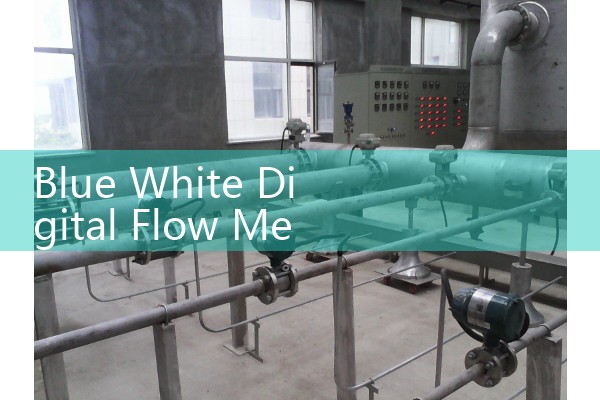
Claimed accuracy is ±1% of reading from 0.3 m/s to 10 m/s. Below 0.3 m/s the error increases, typical for clamp-on transit-time meters. Repeatability is ±0.5%. The turndown ratio is 100:1. In a water treatment plant, this means one meter covers both backwash cycles at 200 m³/h and normal service at 2 m³/h without swapping equipment.
Flow velocity range is 0.06 m/s to 12 m/s. The meter cuts off below 0.06 m/s to avoid false readings. Engineers in oil and gas auxiliary systems use this for cooling water monitoring, where flows stay fairly steady. The totalizer stores data even during power loss, no battery replacement needed. The EEPROM is rated for 10 years typical life.
Why This Matters for Procurement Teams
Lead times are short, typically 1-2 weeks from Silver Automation Instruments. We stock the common pipe size brackets and 24 VDC models. We ship to Malaysia, the UAE, Australia, Chile, Nigeria, and other industrial markets weekly. Every meter leaves our Nanjing warehouse with a calibration certificate traceable to national standards. No extra charge for the certificate, because we know your ISO audit requires it.
Send us your pipe material, outer diameter, wall thickness, fluid type, temperature, and flow range. We will confirm compatibility, recommend transducer size (small, medium, or large), and provide a formal quote within 24 hours. Reach us at Tel: +86-135-1213-1526, Whatsapp: 86-135-12131526, or WeChat: +86 13512131526. Mention the Sonic-Pro and your approximate pipe schedule, and a Silver Automation Instruments applications engineer will handle the rest.
FAQ: Sonic-Pro Ultrasonic Clamp-On Flow Meter
Can the Sonic-Pro measure flow on a vertical pipe? Yes, but flow direction must be upward to ensure the pipe stays full. The meter reports negative flow if installed backwards on vertical lines with downward flow. The display simply shows a negative sign and totalizer counts down. In a diesel generator testing facility in Manila, operators accepted that during drain cycles and just ignored the negative totalizer batch.
Does the meter work on lined pipes? It depends on the liner material and bonding quality. PTFE liners are challenging because the ultrasonic signal attenuates at the liner-pipe interface. Rubber and glass liners are often workable. The built-in signal scope function shows received signal strength. If it falls below 20%, you should try a different section of pipe. We have successfully installed on cement-lined steel in desalination plants after scouting the best clamp position.
What maintenance is required over 5 years? Almost none. The coupling pads need replacement every 3-5 years if outdoor UV exposure is high. The transmitter enclosure gasket should be checked annually. No moving parts, no electrodes, no flow obstruction. A Chilean copper mine uses 14 units and only replaces pads during scheduled plant shutdowns every 4 years.
How is the unit programmed for different pipe sizes? Enter the pipe outer diameter and wall thickness in millimeters. Then select pipe material from the on-screen list. The meter calculates the sound path geometry automatically. The process takes under a minute. No PC software needed. For odd pipe schedules, you can manually enter the sound speed factor if you have that data from the pipe manufacturer.
Can I use one transmitter with two sets of transducers? No, the Sonic-Pro is a single-channel meter. If you need dual-channel measurement for bidirectional flow on two lines, you need two transmitters. For heat metering or energy measurement, consider a dedicated BTU meter instead. Silver Automation Instruments also supplies the Sono 3300 series for energy applications; just ask when you inquire.