

 Current position > News detail
『Clamp Ultrasonic Flow Meter: Fixed and Portable Pipe Monitors』Related information(clamp on meter|electromagnetic meter|venturi meterrotameter|orifice meter|ultrasonic flow meter|mass flow meter|coriolis mass flow meter|coriolis flow meter|magnetic flow meter|magmeter flow meter|magflow flow meter|mag meter flow meter|electromagnetic flow meter|vortex flow meter|turbine flow meter|thermal mass flow meter|thermal flow meter|rotameter flow meter)
Clamp Ultrasonic Flow Meter: Fixed and Portable Pipe Monitors
Quick Answer: Clamp-on ultrasonic flow meters mount on the outside of a pipe. They measure flow without cutting into the line or stopping production. Silver Automation Instruments supplies fixed models for permanent monitoring and portable units for on-site checks, maintenance, and temporary metering. Typical delivery is 5 to 12 days to Southeast Asia, Oceania, the Middle East, Africa, and Latin America.
These meters work by sending ultrasonic signals through the pipe wall and the liquid. The signal travel time changes with flow velocity. The transmitter converts this into a flow rate reading. It works on clean liquids, wastewater, chemicals, and even some oils. The biggest advantage is zero contact with the fluid. No gaskets, no leaks, no pressure drop.
Fixed Clamp-On Meters: Permanent Monitoring Without Shutdown
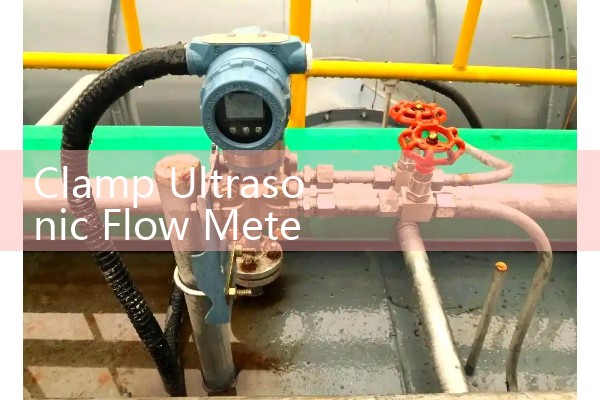
A fixed clamp-on flow meter stays on one pipe segment. We ship these transmitters inside a weatherproof enclosure, rated IP66 or better. The sensors strap onto the pipe with stainless steel bands. You wire the transmitter to your control room via 4-20 mA, pulse, or RS485 Modbus. Some sites use HART on request. Once installed, you get real-time flow data, totalized volume, and alarms on empty pipe or signal loss.
We see these installed in large chilled water loops in a Philippine semiconductor plant, boiler feed water lines in Kenya, and seawater intake pipes at a Saudi desalination station. Pipe sizes range from DN15 to DN6000. The clamp-on sensors work on carbon steel, stainless steel, PVC, HDPE, and copper pipes. Wall thicknesses up to 50 mm are fine. The meter adjusts automatically to pipe material and liner, if you enter the correct sound speed in the setup menu.
In practical terms, a maintenance engineer in Vietnam told us his team installed four fixed clamp meters on a 12-bore cooling water system during normal operation. Total downtime was zero. That is the real payback.
Portable Ultrasonic Flow Meters: One Tool for Many Pipes
A portable clamp-on flow meter is battery powered and weighs around 2.5 kg. Technicians carry it from one test point to another. It takes about 15 minutes to mount the sensors, couple them with acoustic gel, and start reading. These devices are common in water audits, pump efficiency tests, and verifying the accuracy of inline meters. A dairy plant in Indonesia uses a portable unit to check CIP return flows once a week. A service company in Mexico uses the same model to verify magmeter accuracy at five separate municipal water stations.
The data logger inside the portable meter stores up to 100,000 points. You can export to a USB flash drive. Key parameters on the display include flow rate in m³/h or L/s, fluid velocity in m/s, positive and negative totals. The backlit screen works in bright sunlight, a detail operators in the Middle East appreciate.
Where These Meters Fit in Your Industry
Here are real jobs Silver Instruments sees every month:
Water and wastewater. A city water utility in Malaysia wanted to measure flow in a 1200 mm ductile iron raw water main. No bypass existed. A portable meter checked flow over two peak-demand weeks. Later they purchased two fixed units for permanent monitoring.
Oil and gas. A flowback contractor in Argentina measures produced water on temporary surface lines. Portable clamp-on meters avoid cutting into high-pressure steel pipes, keeping the site safe and clean.
Chemical. A sodium hydroxide line in a Thai chemical plant runs at 80 °C. The plant installed a clamp-on meter with high-temperature sensor blocks rated for 160 °C. No exotic alloy wetted parts needed.
Food and beverage. A milk processing line in New Zealand uses a sanitary clamp-
Marine. A ballast water treatment system on a ship registered in Panama needs a meter that does not corrode in seawater. A fixed clamp-on unit with PTFE-faced sensors does the job.
Technical Specs That Matter to Engineers
Most engineers ask these questions first. Let us give you numbers:
Flow range. 0.03 to 12 m/s fluid velocity. Bi-directional measurement is standard. The meter totalizes in both directions.
Accuracy. ±1.0% of reading for flow above 0.3 m/s. In field conditions, you may see ±1.5% depending on pipe surface and alignment. Repeatability is 0.2%.
Pipe diameter. DN15 up to DN6000. One pair of sensors covers most common sizes. We provide a large size sensor option for pipes above DN2000.
Temperature range. Standard sensors handle -40 °C to 130 °C. High-temperature sensors go to 160 °C. The transmitter itself operates from -25 °C to 65 °C.
Outputs. 4-20 mA (loop powered or active), pulse, RS485 Modbus RTU. Optional HART, GPRS data logger for remote sites.
Enclosure. Fixed transmitter: IP66 aluminum or stainless steel. Portable: IP54, drop-tested to 1 meter. ATEX Zone 2 certifications are available on request.
Five Questions Engineers Ask Before Ordering
1. What pipe materials work with clamp-on meters?
Carbon steel, stainless steel, PVC, HDPE, cast iron, ductile iron, copper, and even glass-lined pipes are compatible. The meter needs the pipe wall to transmit ultrasound. Loose scale or thick internal rust layers cause signal loss. In practice, most water pipes are fine. For old cast iron, we may suggest a site test with a portable unit first.
2. Can the meter handle liquids with some solids or bubbles?
Clamp-on ultrasonic meters need a relatively clean liquid. Up to 2% suspended solids or small gas bubbles are usually okay. A municipal sludge line with 4% solids will give intermittent readings. In that case, an insertion electromagnetic flow meter is a better choice.
3. How long does battery last on the portable model?
Eight hours continuous operation with the backlight on. A full recharge takes four hours. We include a 12V car charger adapter for fieldwork in remote areas.
4. Do I need to program the meter myself?
No. If you tell us the pipe OD, wall thickness, material, and fluid type, we pre-configure the transmitter in our factory. It arrives ready to mount and read. The menu is simple do not let the word ultrasonic scare you off. Most technicians learn the key functions in under 30 minutes.
5. What is the delivery time to my country?
Fixed meters ship in five to nine business days. Portable units ship in one to three business days because we keep stock. We send by DHL, FedEx, or sea freight as you prefer. Our logistics desk handles customs clearance papers for Nigeria, Brazil, Vietnam, Saudi Arabia, and all other core markets.
We answer these and more specific questions daily. You can reach us on WhatsApp at 86-135-12131526 or call +86-135-1213-1526 during Asia business hours. Email always works: [email protected]. WeChat: +86 13512131526. Our product pages on flow-meter.com.au list all technical datasheets and installation guides.
Ready for a quote? Send us your pressure (bar), temperature (°C), pipe size (DN), pipe material, and flow range. A real engineer reads your email and replies within 12 hours. We assist with technical selection, not sales scripts. That is how Silver Automation Instruments wins repeat business from 40 countries.