

 Current position > News detail
『Doppler Shift Flow Meter: Evaluating Slurry and Aerated Pipe Fluids』Related information(clamp on meter|electromagnetic meter|venturi meterrotameter|orifice meter|ultrasonic flow meter|mass flow meter|coriolis mass flow meter|coriolis flow meter|magnetic flow meter|magmeter flow meter|magflow flow meter|mag meter flow meter|electromagnetic flow meter|vortex flow meter|turbine flow meter|thermal mass flow meter|thermal flow meter|rotameter flow meter)
Doppler Shift Flow Meter: Evaluating Slurry and Aerated Pipe Fluids
Quick Answer
Doppler shift flow meters handle slurries and aerated fluids where other meters lose signal. They need particles or bubbles above 100 microns and a concentration of at least 100 ppm. If your fluid has suspended solids or entrained air, a Doppler meter is often the only clamp-on solution that works.
Why Slurries and Aerated Fluids Break Most Flow Meters
Magmeters need a conductive liquid with stable flow profile. Slurries with high solids content wear down electrodes and liners. Vortex meters lose the vortex pattern when gas bubbles appear. Ultrasonic transit-time meters need a clean acoustic path. Even a thin layer of sludge on the pipe wall kills the signal.
Here is the thing. In mining, dredging, and wastewater, the fluid is never clean. It carries sand, rock fines, pulp, or entrained air from pumps and drops. Customers in Chile, Australia, and Ghana often tell us they tried transit-time meters first. The meters worked on tap water during commissioning. Then real slurry came. No signal. That is when they called Silver Automation Instruments.
How Doppler Shift Works in Dirty Fluids
A Doppler flow meter sends an ultrasonic beam into the pipe through a clamp-on transducer. The beam reflects off particles or bubbles moving with the flow. The reflected signal shifts in frequency. The meter converts that frequency shift to velocity. This principle does not need a clean liquid. It needs targets, and slurries are full of targets.
One transducer sends and receives if it is a single-head design. A dual-head design uses separate transducers. Most of our customers choose single-head because installation is simpler. The sensor straps on the outside of the pipe. No cutting, no welding, no process shutdown. Pipe materials can be carbon steel, stainless steel, PVC, or HDPE. The pipe wall must transmit ultrasound. Concrete or fiberglass pipes with liners sometimes need a spool piece.
Real Numbers That Matter on Site
We see minimum particle size around 100 microns for good signal. Concentration can be as low as 100 ppm but works best above 1000 ppm. Flow velocity must be above 0.03 m/s. Below that, the Doppler shift is too small. Pipe size ranges from DN25 to DN4000 on our standard SD series Doppler flow meters. On a DN100 pipe with 3 percent kaolin slurry at 2 m/s, accuracy is typically plus or minus 2 percent of reading. Repeatability is 0.5 percent. These numbers come from a water treatment plant in Indonesia that processes 500 cubic meters per hour of river sludge.
Aerated Fluids: The Hidden Problem
Pumps create air. Cavitation releases bubbles. Open channels entrain air. In the food and beverage sector, a CIP return line often contains foam and air slugs. A magmeter reads zero or jumps around. A Doppler meter sees the bubbles as reflectors. The reading stays stable. We installed a clamp-on Doppler meter on a CIP return line at a dairy in New Zealand. The line carried 25 percent air fraction during tank switching. The meter tracked flow changes within 3 seconds. The plant used the signal to control pump speed.
For high air fractions above 30 percent, even Doppler can struggle. You may see a drop in signal strength. The rule is simple. If you can hear the pump gurgling, the meter is near its limit. Talk to our engineers and describe the pipe sound and pulsation. That helps us recommend the right mounting location.
Slurry Applications Across Industries
Mining in Peru uses Doppler meters on tailings lines with magnetite and silica. The slurry is abrasive and black. A magmeter liner lasted six months. The clamp-on Doppler has been running for two years with no contact. In a ceramic plant in Malaysia, a Doppler meter measures kaolin slip at 45 percent solids. The pipe is HDPE DN150. The meter outputs 4-20 mA HART to a local PLC. No wear parts, no calibration drift.
Wastewater plants in Bahrain use Doppler meters on sludge recycle lines. The sludge has 2 percent solids, mostly organic. The pipe vibra
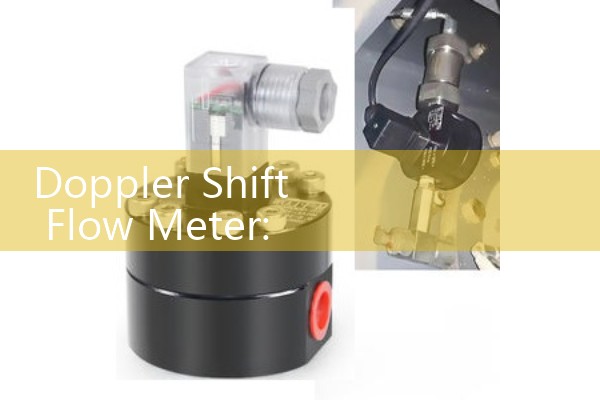
In dredging operations offshore Nigeria, the suction line carries sand-water mixture at high velocity. The sensor is mounted on a DN500 rubber hose. A protective cage around the clamp-on assembly keeps it safe from accidental impact. The meter gives a flow total and a real-time velocity trend on a paperless recorder.
Installation Tips Most Engineers Skip
Pick a straight run of 10 pipe diameters upstream and 5 downstream. This is not a strict rule for Doppler, but it helps. Remove rust and paint down to bare metal if the pipe is steel. Use acoustic coupling gel. Do not clamp on top of the pipe. Air collects at the top. Mount at 3 oclock or 9 oclock. If the pipe is vertical with upward flow, any position works because the pipe is always full.
We have seen a customer in the Philippines mount the transducer on a section with partial fill. Signal was intermittent. The fix was a downstream valve to create backpressure. Full pipe, stable signal. Simple, but not always obvious on a Friday afternoon.
Comparing Doppler with Other Technologies
Transit-time ultrasonic meters need clean liquid with fewer than 50 ppm solids. Coriolis mass flow meters can measure slurries but cost more and require inline installation. Electromagnetic flow meters handle some slurries but not aerated fluids and the electrodes wear. Doppler is the only non-contact option that thrives on dirt. The trade-off is lower accuracy (2 percent versus 0.5 percent for a Coriolis) and the need for minimum solids or bubbles. For many industrial processes, 2 percent is enough, and no process downtime beats a higher accuracy number.
Common Questions from End Users
What if my slurry settles when the pump stops?
The meter reads zero because no flow and no targets. Some settled solids will sit in the pipe. When the pump restarts, the Doppler picks up again. No issue. For long shutdowns, flush the line to prevent hard deposits.
Can it measure clear water with occasional solids?
No. If the water is clear, the meter gets no return signal. A customer in Vietnam tried to measure river water. During the dry season, the water was too clean. They added a static mixer upstream to introduce microbubbles. That trick got them through the season.
Is the meter approved for hazardous areas?
Silver Instruments offers ATEX Zone 1 versions with intrinsically safe transducers. Tell us your zone classification and gas group. We will select the correct barrier and cable entry.
What about signal spiking from large bubbles?
A slug of air can cause a momentary spike. Use the meters damping filter. Set it to 30 seconds if the pipe normally has slugs. The average reading stays usable for trend and totalizing.
How often do I need to recalibrate?
The factory calibration uses a flow rig matching your pipe material and diameter. We check zero and span once. In the field, a verification tool checks the electronics. No re-calibration needed unless the pipe changes. We have units in service for eight years without drift.
Doppler Flow Meter Order Checklist
Send us these six numbers. Pipe outer diameter or DN. Pipe material and wall thickness. Fluid type and typical solids concentration in percent or ppm. Flow range min and max in m3/h or l/min. Temperature in degrees Celsius. Output signal required: 4-20 mA HART, pulse, RS485 Modbus. Also tell us if you need a local display or a remote transmitter.
Email: [email protected]
Tel: +86-135-1213-1526
WhatsApp: 86-135-12131526
WeChat: +86 13512131526
Silver Automation Instruments ships from Nanjing, China. We deliver to over 50 countries with full documentation and two-year warranty. For Doppler meters on slurry or aerated pipe fluids, call or message us with your pipe specs. We reply within 12 hours with a detailed quote and installation drawing.