

『Marine Flow Meter: Fuel Economy Monitoring and Hull Utility Systems』Related information(clamp on meter|electromagnetic meter|venturi meterrotameter|orifice meter|ultrasonic flow meter|mass flow meter|coriolis mass flow meter|coriolis flow meter|magnetic flow meter|magmeter flow meter|magflow flow meter|mag meter flow meter|electromagnetic flow meter|vortex flow meter|turbine flow meter|thermal mass flow meter|thermal flow meter|rotameter flow meter)
Marine Flow Meter: Fuel Economy Monitoring and Hull Utility Systems
Quick Answer: For marine fuel economy monitoring, use a Coriolis mass flow meter on the main engine heavy fuel oil supply line and an oval gear flow meter on each diesel generator line. For hull utility water systems, electromagnetic flow meters solve most seawater, ballast water, cooling water and bilge water measurement jobs. Silver Instruments supplies both meter types with 4-20 mA HART output, local totalizers and marine suitable materials.
Silver Automation Instruments supplies marine flow meters for two different jobs. The first job is fuel measurement on propulsion engines and generator engines. The second job is hull utility measurement on water and wastewater networks. A meter that works on 380 cSt heavy fuel oil usually does not fit a low pressure seawater line.
Fuel Economy Monitoring Starts at the Fuel Supply Line
Marine fuel oil at 50°C can have viscosity from 30 cSt for marine diesel oil to 380 cSt for heavy fuel oil. That is close to 370 cP for typical heavy fuel oil density. On many vessels, fuel temperature reaches 120°C to 135°C before injection. Because of this, a Coriolis mass flow meter is the first choice for the main engine. It measures mass flow in kg/h directly. It does not need viscosity correction.
We recommend a Silver Instruments Coriolis mass flow meter with a flow range of 0 to 20 t/h, DN25 or DN50 process connection, 16 bar pressure rating and 4-20 mA HART output. The meter sends live mass flow, density and temperature to the engine room monitoring panel or a paperless recorder. A vessel operator in Singapore runs this setup on a 6,000 kW main engine. The data helps the crew compare specific fuel oil consumption across voyages.
Diesel Generator Fuel Monitoring with Oval Gear Meters
Auxiliary engines and generators do not always justify a Coriolis meter. Fuel flow rates are lower, often 0.2 to 6 m3/h, and diesel is cleaner than heavy fuel oil. We have seen many customers in Vietnam and the Philippines use a Silver Instruments oval gear flow meter for diesel generator consumption. The meter is small, fits DN15 or DN20 lines, and costs less than a Coriolis meter.
Typical parameters are flow range 0.1 to 6 m3/h, pressure 5 bar, temperature up to 40°C, accuracy plus or minus 1.0 percent of reading. The output can be pulse or 4-20 mA. Connect the pulse output to a totalizer to track daily fuel consumption per generator set. This data identifies which generator is using more fuel at the same load. A PT100 temperature sensor can sit in the same pipe section to send °C data to the recorder.
Hull Utility Water Systems Need a Different Meter Type
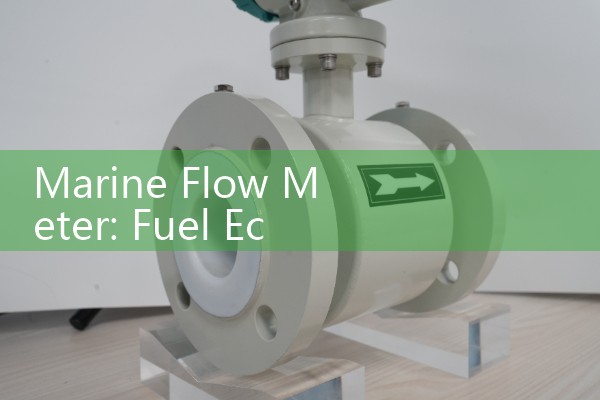
Sea chest cooling water, ballast water, potable water and bilge water all have different chemistry. The common point is that they are conductive liquids. Electromagnetic flow meters are a practical fit. They do not block the pipe, they create almost no pressure drop, and they tolerate particles. Because seawater is highly conductive, the electromagnetic flow meter gives a stable signal. Seawater conductivity is roughly 50,000 µS/cm, well above the 5 µS/cm minimum for most electromagnetic meters.
For seawater cooling lines, select an electromagnetic flow meter with titanium electrodes and a PTFE or hard rubber liner. Silver Instruments supplies this meter from DN15 up to DN300. A typical cooling water line on an offshore supply vessel runs at 6 bar and 25°C to 50°C with flow from 30 to 150 m3/h. The meter outputs 4-20 mA HART plus a local display. The empty pipe detection function helps when the line is drained during port stays.
Ballast water systems are different. Flow volume is large, and the pipe can be DN150 to DN400. An electromagnetic flow meter with a remote display works better in these locations because space is limited in the ballast pump room. The meter should have a 10 to 16 bar pressure rating and protection for humid environments. We recommend IP68 sensor housing for bilge and ballast service.
For temporary flow checks on hard pipe, an ultrasonic clamp-on flow meter can be used without cutting
For auxiliary steam or compressed air service, a vortex flow meter works better than an electromagnetic meter. For low pressure air and nitrogen purging, a thermal mass flow meter gives direct mass flow without pressure compensation.
Pressure Transmitters and Paperless Recorders Complete the Monitoring Loop
Fuel economy is not only about flow. Pressure drop across filters, fuel supply pressure before the engine and seawater pump discharge pressure all change with load and fouling. A Silver Instruments pressure transmitter with 4-20 mA HART output gives the engine room crew a real time signal for these points. In practice, most engineers skip this part on small vessels and add it later when they need better fault finding.
A paperless recorder can log flow, pressure and temperature signals together. This matters for fuel consumption reports and for class survey documentation. Choose a recorder with at least 6 analog inputs and 2 relay outputs. The crew can alarm on low fuel pressure or high cooling water flow loss. We have seen this avoid engine derating on a fishing vessel in Australia.
Recommended Marine Flow Meter Options
| Application | Recommended Meter | Key Parameters |
|---|---|---|
| Main engine heavy fuel oil | Coriolis mass flow meter | 0 to 20 t/h, DN25 to DN50, 16 bar, 150°C, 4-20 mA HART |
| Auxiliary diesel generator | Oval gear flow meter | 0.1 to 6 m3/h, DN15 to DN20, 5 bar, pulse or 4-20 mA |
| Seawater cooling line | Electromagnetic flow meter | DN50 to DN150, 30 to 150 m3/h, titanium electrodes, PTFE liner |
| Ballast water line | Electromagnetic flow meter | DN150 to DN400, up to 400 m3/h, remote display, IP68 |
| Fuel or water pressure | Pressure transmitter | 0 to 16 bar or 0 to 40 bar, 4-20 mA HART |
Questions Engineers Ask Before Ordering
Q: Does one flow meter cover both heavy fuel oil and seawater?
A: No. Heavy fuel oil needs a Coriolis or oval gear meter because the oil is non conductive and viscous. Seawater needs an electromagnetic flow meter because it is conductive and dirty. Use separate meters for each line.
Q: What output signals should I request for fuel economy monitoring?
A: Request 4-20 mA HART for the main engine fuel meter and pulse or 4-20 mA for auxiliary diesel meters. HART lets you read mass flow, density and diagnostics from the control system. Pulse is simple for totalizing.
Q: Can the electromagnetic flow meter work in a humid engine room?
A: Yes. Select a remote display version with IP68 sensor housing and keep the converter in a dry control cabinet. The sensor works in humid and salty air. We have supplied this setup for tugs and offshore vessels.
Q: Do you supply meters for ATEX Zone 1 fuel areas?
A: Yes. We can supply Ex d or Ex ia versions for flow meters and pressure transmitters. You will need to confirm the gas group and temperature class from your hazardous area classification drawing.
Q: What minimum parameters do you need for a quote?
A: Send us fuel type, viscosity, flow range, pipe size in DN, pressure in bar and temperature in °C. For seawater, also send conductivity and pipe material. We will recommend one meter for each line and provide a technical quotation.
Get a Specific Marine Flow Meter Quote
Tell us the fluid, flow range, pressure, temperature, pipe size and output signal you need. Also tell us if the meter is for a fuel line or a water line. We will reply with a model number and price range.
Silver Automation Instruments
Tel: +86-135-1213-1526
WhatsApp: 86-135-12131526
WeChat: +86 13512131526
Web: flow-meter.com.au
 Hot Blog
 Related AD