

『Krohne Flow Meter H250 Sizing: Classic Metal Tube Variable Area Rotameter for Chemical Process Lines』Related information(clamp on meter|electromagnetic meter|venturi meterrotameter|orifice meter|ultrasonic flow meter|mass flow meter|coriolis mass flow meter|coriolis flow meter|magnetic flow meter|magmeter flow meter|magflow flow meter|mag meter flow meter|electromagnetic flow meter|vortex flow meter|turbine flow meter|thermal mass flow meter|thermal flow meter|rotameter flow meter)
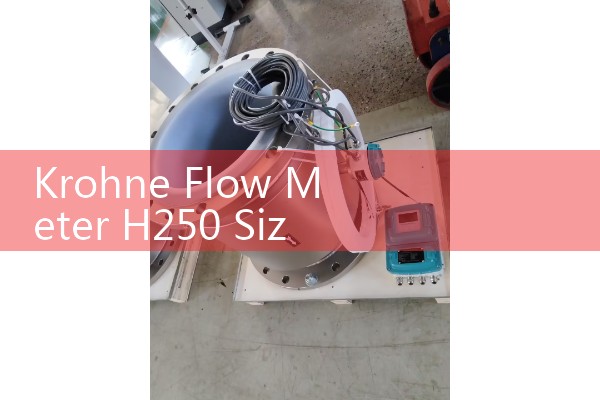
Krohne Flow Meter H250 Sizing: Classic Metal Tube Variable Area Rotameter for Chemical Process Lines
Quick Answer: The Krohne H250 is a metal tube variable area rotameter sized by liquid density, viscosity, pipe diameter, and required flow range. For most chemical lines, collect the minimum and maximum flow rate in kg/h or L/h, operating temperature in °C, pressure in bar, and fluid phase before you select DN15 to DN100. Send those values to Silver Automation Instruments and we will return a standard H250 type or an equivalent metal tube rotameter quote within one working day.
Why the H250 Still Works on Chemical Process Lines
Many engineers ask us whether variable area meters are too simple for modern chemical plants. In practice, the H250 design survives because it gives a direct local flow reading without external power. A shift supervisor can walk past the meter and see the float position through the metal tube indicator. That mechanical indication still matters on lines where a batch reactor run must be confirmed visually before the next step.
We have supplied equivalent metal tube rotameters to a chlor-alkali plant in Indonesia and a solvent recovery unit in Thailand. The common request in both cases was the same. They wanted a 4-20 mA HART output for the control room plus a local scale for the operator. That setup covers audits, troubleshooting, and day to day operation.
Sizing Inputs You Need for the H250
Most engineers skip one item when sizing a variable area meter. They send only flow rate and pipe size. Here is the thing. For chemical process lines, density and viscosity decide whether the float will respond in a linear way and whether the scale needs correction.
Start with these six values:
- Minimum and maximum flow rate in kg/h or L/h
- Fluid name or liquid density at operating temperature
- Fluid viscosity in cP at operating temperature
- Operating pressure in bar
- Operating temperature in °C
- Pipe size and process connection standard
For example, 30 percent sodium hydroxide at 40 °C has a density around 1320 kg/m³ and viscosity near 10 cP. That is not a huge correction for a standard water-calibrated H250, but you must still mark it clearly if the float scale is for water. For sulfuric acid at 96 percent, viscosity is above 20 cP at 20 °C. You may need actual liquid calibration or a correction factor from the supplier.
Flow Range, Accuracy, and Process Connections
A standard H250 in metal tube design covers liquid flow ranges from about 10 L/h up to 150,000 L/h depending on size and float geometry. Accuracy is usually 1.6 percent of full scale. With special calibration, you can get 1.0 percent on some spans. That is why proper sizing matters. If you oversize the meter and run at 10 percent of the range, a 1.6 percent full scale error becomes a large portion of the actual reading.
The classic H250 comes in DN15, DN25, DN40, DN50, DN80, and DN100 sizes. Process connections are typically flanged to EN 1092-1 or ASME B16.5. Wetted material is stainless steel 316L as standard. For acids, chlorides, or aggressive solvents, PTFE or PFA liners and Hastelloy C-22 floats are common. The H250 can also be specified with ATEX Zone 1 or IECEx approval for solvent and resin areas.
For a 25 mm chemical dosing line moving 100 to 1000 L/h of 30 percent sodium hydroxide, a DN25 H250 with 316L body, PTFE liner, and 4-20 mA H
Output and Alarm Options for Chemical Lines
On a basic H250, the local indicator is enough for manual flow adjustment. Most chemical plants in Southeast Asia and the Middle East request 4-20 mA HART because the DCS already runs on analog loops. You can add one or two limit switches for low flow and high flow alarms. That is common on cooling water to a reactor jacket or on a dosing line for a catalyst.
Silver Instruments supplies metal tube variable area rotameters with the same output options. We configure the 4-20 mA span, alarm set points, and the scale in your engineering unit. If you already have a H250 installed and need a spare with the same pipe-to-pipe length, send us the serial data or a photo of the nameplate. We will check the flange spacing and process connection before quoting.
Krohne H250 Sizing Steps in Short
First, convert the batch or continuous flow into a minimum and a maximum. Second, confirm the fluid phase and density. Third, check viscosity. If viscosity is above 10 cP, tell the supplier before selection. Fourth, pick the process connection and wetted material for your fluid. Fifth, choose the output signals needed by the control system.
Because the H250 is a variable area meter, the flow scale is calibrated for a defined density and temperature. When your process runs at a different density, the reading must be corrected. Most suppliers can provide a scale in the actual medium or a correction table. Do not accept a standard water scale for a solvent with 0.79 kg/L density unless the vendor confirms the correction factor.
Five FAQ Questions for H250 Sizing
Q: Can I use the H250 for aggressive acid service?
Yes, with PTFE or PFA liner and Hastelloy C-22 wetted parts. You must send the acid concentration, temperature, and flow range. The meter scale is set for the actual density and viscosity.
Q: What is the typical accuracy of the H250?
Standard accuracy is 1.6 percent of full scale. Optional calibration can reach 1.0 percent of full scale on some sizes. Accuracy is tied to the full scale value, so avoid oversized meters.
Q: Does the H250 need straight inlet pipe runs?
In most installations, no straight run is required because the float is inside the meter body. You should still avoid mounting the meter directly after a partially open control valve with heavy turbulence.
Q: Can I get 4-20 mA HART from the H250?
Yes. The H250 supports a 4-20 mA HART output and limit switches. Silver Instruments configures the output span and alarm points for your DCS or PLC.
Q: How do I get a quote for an H250 equivalent metal tube rotameter?
Send us your pressure in bar, temperature in °C, pipe size in DN, and flow range in kg/h or L/h. We will respond with a technical selection and price for a standard metal tube variable area rotameter.
Request a Sizing Check from Silver Instruments
If you are building a new chemical dosing line or replacing an existing variable area meter, send us the complete process data. We can offer a like for like replacement for Krohne H250 or an equivalent metal tube rotameter from our own range. Contact Silver Automation Instruments at Tel: +86-25-68650347, WhatsApp: +86-25-52155837, or WeChat: +86 15365082610.
 Hot Blog
 Related AD