

 Current position > News detail
『Flux Flow Meter Sizing: Heavy-Duty Barrel and Container Pump Instruments for Chemical Transfers』Related information(clamp on meter|electromagnetic meter|venturi meterrotameter|orifice meter|ultrasonic flow meter|mass flow meter|coriolis mass flow meter|coriolis flow meter|magnetic flow meter|magmeter flow meter|magflow flow meter|mag meter flow meter|electromagnetic flow meter|vortex flow meter|turbine flow meter|thermal mass flow meter|thermal flow meter|rotameter flow meter)
Flux Flow Meter Sizing: Heavy-Duty Barrel and Container Pump Instruments for Chemical Transfers
Quick Answer: For most chemical transfers with Flux barrel or container pumps, use a positive displacement oval gear meter when viscosity is above 20 cP. Use an electromagnetic flow meter for conductive water-like chemicals. Use a Coriolis mass flow meter when you need mass total or density data. Always confirm chemical compatibility and pump flow range before sizing.
When a chemical transfer skid runs a Flux pump, the flow meter must match the pump curve and the fluid. Many plants size a meter for maximum flow only. That creates problems at low flow because the meter may stall or read zero. In practice, you should check the minimum flow first. A drum pump often starts at 5 L/min and rises to 40 or 60 L/min. A meter with a wide turndown ratio handles this better than a narrow range device. But that is not the whole story.
Start with flow range and viscosity
Flux barrel and container pumps typically operate from 5 L/min to 120 L/min depending on motor type, tube length, and impeller. The meter should cover that range with at least a 10 to 1 turndown. Positive displacement meters from Silver Automation Instruments have a turndown of 10 to 1 or better. Electromagnetic meters can reach 20 to 1. That gives stable readings even when the pump is not running at full speed.
Viscosity is the next gate. Water-like chemicals under 20 cP work well with an electromagnetic flow meter if the conductivity is above 5 µS/cm. Acetone, MEK, and some solvent blends may not have enough conductivity. For those fluids use an oval gear meter. For thick resins, inks, or syrups above 100 cP, an oval gear meter with a larger clearance is often the safer choice. Turbine meters can be too sensitive to viscosity changes during a batch.
Recommended meter pairings for drum and IBC transfers
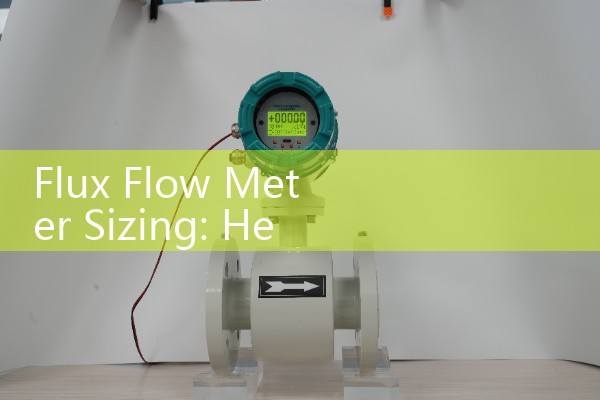
For oils, solvents, inks, and resins, pair a Flux pump with a Silver Instruments oval gear flow meter. A DN15 size covers 0.5 to 30 L/min and provides 4-20 mA HART output. Wetted parts in stainless steel and PEEK serve most solvent-based fluids. For water treatment chemicals, acids, and caustic transfers, use a DN15 electromagnetic flow meter. A PTFE liner and Hastelloy or titanium electrodes handle aggressive media. The meter can output pulse, 4-20 mA, or RS485 Modbus.
For high accuracy mass measurement, use a Coriolis mass flow meter with DN10 or DN15 connections. It measures kg/h directly. This helps when chemicals are bought or consumed by weight. A customer in Vietnam used this setup to dose two-component adhesive from 200 L drums. He needed density and total mass data. That one meter replaced a weighing scale and gave a faster batch time.
Pressure, temperature, and mounting
Chemical transfers from barrels and IBCs often run at low pressure, usually under 2 bar. Some drum pumps can reach 6 bar on long hose runs. Check the meter body pressure rating. Many small meters are rated to 10 bar or 16 bar. Temperature in chemical storage varies from 5 °C to 60 °C in most plants. For hot solvents above 80 °C, tell us before quoting because seal and liner choices change.
Mounting location matters. Place the meter on the discharge side of the pump. Avoid long vertical drops where
Materials and chemical compatibility
Barrel pumps handle acids, alkalis, solvents, edible oils, and paints. The flow meter wetted parts must match the fluid. For acids use PTFE or PFA liners in electromagnetic meters. For solvents use stainless steel and PEEK in oval gear meters. For food grade transfers use 316L stainless steel with FDA approved seals. Send us the safety data sheet or the chemical name and concentration. We check compatibility before offering a model.
Sizing guidance and a real example
Do not size by pipe diameter alone. Use flow rate and viscosity. A practical start is DN15 for 0.5 to 30 L/min, DN20 for 5 to 80 L/min, and DN25 for 20 to 120 L/min. Confirm pressure drop from the meter stays below 0.5 bar on high viscosity fluids. Example from a paint manufacturer in Southeast Asia: a Flux pump ran at 40 L/min with solvent-based paint at 80 cP. Silver Automation Instruments supplied a DN20 oval gear meter with 4-20 mA HART. The meter totalized 1,200 L per batch. Accuracy stayed within 0.5 percent.
Data needed for a fast quote
Do not just ask for a flow meter price. Send us your pressure in bar, temperature in °C, pipe size in DN, and flow range in L/min or kg/h. Include viscosity in cP and the chemical name. That lets us pick the right meter and avoid expensive trial and error. Call Tel: +86-25-68650347, Whatsapp: +86-25-52155837, WeChat: +86 15365082610.
FAQ: Flux barrel and container pump flow meter sizing
Q: Which flow meter type works best with a Flux drum pump? A: It depends on viscosity. For water-like conductive chemicals use an electromagnetic flow meter. For oils, solvents, and high viscosity fluids use an oval gear meter. For mass and density data use a Coriolis meter.
Q: Can an electromagnetic flow meter measure all chemicals? A: No. The fluid must have a minimum conductivity. Acetone, MEK, and some hydrocarbons may not work. In that case use an oval gear flow meter.
Q: What size meter fits a 1 inch hose or pump outlet? A: DN15 or DN20 usually fits. Check the flow range and pressure drop. DN15 suits 0.5 to 30 L/min. DN20 suits 5 to 80 L/min.
Q: Do I need ATEX approval for solvent transfer? A: Yes if the area is classified. Tell us the zone and gas group. We can offer ATEX Zone 1 or Zone 2 versions for many meter types.
Q: How do I avoid measurement errors with pulsing drum pumps? A: Use a meter with fast damping or add a pulse dampener. Place the meter on the discharge side and keep the hose run short and free of air traps.
We support customers in Southeast Asia, Oceania, Latin America, Africa, and the Middle East. Silver Automation Instruments supplies flow meters for process skids, chemical transfer, water and wastewater, oil and gas, food and beverage, and marine systems. Send your chemical name, flow range, and line size. We will reply with a specific model and price.