

『Cylinder Flow Meter: Industrial Shielding Gas Regulator Visual Scales』Related information(clamp on meter|electromagnetic meter|venturi meterrotameter|orifice meter|ultrasonic flow meter|mass flow meter|coriolis mass flow meter|coriolis flow meter|magnetic flow meter|magmeter flow meter|magflow flow meter|mag meter flow meter|electromagnetic flow meter|vortex flow meter|turbine flow meter|thermal mass flow meter|thermal flow meter|rotameter flow meter)
Cylinder Flow Meter: Industrial Shielding Gas Regulator Visual Scales
Quick Answer: A cylinder flow meter with a visual scale measures shielding gas flow directly at the cylinder regulator. Silver Automation Instruments supplies these meters for argon, CO2, helium, and mixed gases. Most customers choose ranges from 0 to 25 L/min or 0 to 60 SCFH with CGA inlet connections.
Why a Visual Scale on a Cylinder Flow Meter Matters
Most welding supervisors do not want guesswork. A visual scale shows the actual flow rate through a clear tube. The operator reads the center of the floating ball. If the ball sits between 15 and 16 L/min, the shielding gas is running at about 15.5 L/min. That is direct information. No battery. No signal loop. No calibration software.
We have seen many sites use a standard pressure regulator without a flow scale. The welder opens the valve until gas hisses. That might be too low or too high. Too low gives weld porosity. Too high wastes gas and can draw air into the arc. A cylinder flow meter with a visual scale removes most of this error.
Where Cylinder Flow Meters Are Used
These meters are common in metal fabrication shops, shipyards, and pipeline crews. TIG and MIG welders need steady shielding gas. A food and beverage plant may use nitrogen purge gas at a packaging line. A chemical site may use argon for blanketing small cylinders. The same visual scale principle applies. You read the gas flow at the point of use. That reduces arguments between shifts about gas usage.
Because shielding gas flow changes with cylinder pressure and downstream restrictions, a visual scale on the regulator gives immediate feedback. If the ball drops during a weld, the operator knows the line is blocked or the cylinder is near empty.
Gas Types and Typical Flow Ranges
Shielding gas is not one product. Argon is common for TIG welding. CO2 is common for MIG welding. Helium mixes are used for stainless steel and aluminum. Silver Instruments offers visual scale flow meters calibrated for these gases. The tube may be marked in L/min, SCFH, or both.
Typical ranges we quote for customers:
Argon: 0 to 25 L/min, inlet CGA-580, outlet 1/4 inch hose barb, often supplied as model SI-CFM25
CO2: 0 to 50 SCFH, inlet CGA-320, outlet 1/4 inch hose barb, often supplied as model SI-CFM50
Helium mix: 0 to 80 SCFH, inlet CGA-580, outlet 1/4 inch flare, often supplied as model SI-CFM80
These are common industrial values. But we do not want you to guess. Send us the gas type and required range. We will match the tube and float combination. A visual scale is only useful when the range matches the process. A 0 to 100 L/min scale on a small TIG torch is hard to read. A 0 to 15 L/min scale on a heavy MIG line can peg the float at the top.
Build Quality and Materials
Most of our cylinder flow meters use a brass body with a polycarbonate or glass tube. For dry shielding gas, polycarbonate is enough. For damp or outdoor environments, glass lasts longer. The float can be stainless steel or black glass. Th
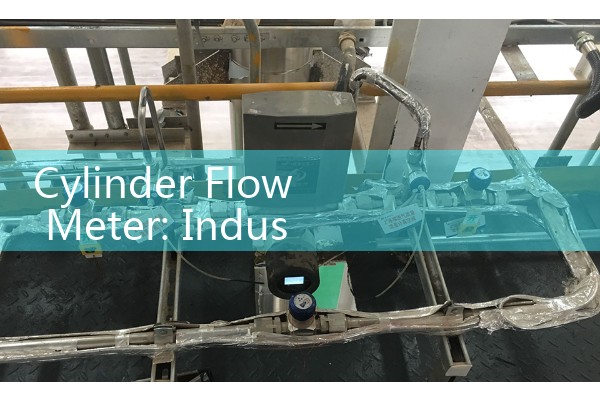
In practice, a metal fabricator in Thailand asked us for a replacement flow meter last year. He kept breaking the plastic tube during cylinder changeover. We supplied a brass body with a polycarbonate shield. That shield protected the tube from hand tools and occasional drops. The gas flow stayed stable. We now recommend that option for rough workshop use.
Installation and Reading on Site
Mount the flow meter vertically. The float must move up through the tube without touching the wall. If you mount it at an angle, the ball can stick. That gives a false reading. Use a wrench on the flats, not on the tube. Tighten the inlet to the cylinder valve. Then attach the hose to the outlet barb. Purge the line for a few seconds before striking the arc.
Read the visual scale at the center of the ball, not at the top edge. A 2 mm shift can mean over 1 L/min error on small tubes. Some customers mark the target flow with a small piece of tape on the clear tube cover. That speeds up shift changes. It does not affect the reading.
Pricing and Lead Time
We quote cylinder flow meters based on gas type, inlet connection, flow range, and tube material. A standard brass argon flow meter with CGA-580 inlet and 0 to 25 L/min scale is usually in stock. CO2 units with CGA-320 inlets are also fast to ship. Custom ranges or dual scale printing add a few days.
Send us your pressure in bar or psi, gas type, flow range, and cylinder connection standard. For Southeast Asia and Oceania, many customers use CGA or DIN 477. For the Middle East, cylinder valves can vary. We will confirm the thread before shipping. Contact Silver Automation Instruments by Tel: +86-25-68650347 or WhatsApp: +86-25-52155837. WeChat: +86 15365082610. You can also reach us through flow-meter.com.au.
FAQ
Q: Can the visual scale be used on any cylinder?
A: No. The inlet connection must match the cylinder valve. Common options include CGA-580 for argon and CGA-320 for CO2. We also supply DIN 477 and other thread standards.
Q: How accurate is a cylinder flow meter with a visual scale?
A: For workshop use, expect plus or minus 5 percent of full scale. If you need higher accuracy or a 4-20 mA output, consider a thermal mass flow meter or a Coriolis meter. But for shielding gas, visual reading is usually enough.
Q: What flow range should I order?
A: Most TIG welding uses 7 to 15 L/min argon. MIG welding with CO2 may use 15 to 25 L/min. Send us your process and we will recommend a range.
Q: Can you print a private label on the visual scale?
A: Yes. We can add your logo or part number on the backplate for OEM orders. Minimum order quantity depends on tube printing and label type.
Q: Do you supply spare tubes and floats?
A: Yes. Spare parts are available for common models. Keep one spare tube and float on site. That prevents downtime when a cylinder is dropped.
 Hot News
 Related AD