

『Oil Flow Meter Carbon Steel Body: Rugged and Affordable Sizing for Clean Petroleum』Related information(clamp on meter|electromagnetic meter|venturi meterrotameter|orifice meter|ultrasonic flow meter|mass flow meter|coriolis mass flow meter|coriolis flow meter|magnetic flow meter|magmeter flow meter|magflow flow meter|mag meter flow meter|electromagnetic flow meter|vortex flow meter|turbine flow meter|thermal mass flow meter|thermal flow meter|rotameter flow meter)
Oil Flow Meter Carbon Steel Body: Rugged and Affordable Sizing for Clean Petroleum
Quick Answer: A carbon steel oil flow meter is the most practical choice for measuring clean petroleum like diesel, kerosene, or hydraulic oil in non-corrosive applications. It gives you solid mechanical strength without the premium cost of stainless steel. For power units, skids, or fuel depots where the fluid is clean and dry, this body material can operate reliably for years if you pick the right meter size.
Why Carbon Steel Makes Sense for Clean Petroleum
Engineers and buyers often jump to 316 stainless steel because it feels like a safe default. But here is the thing. Clean petroleum products do not attack carbon steel. If your fluid is free from water, acids, or aggressive chemicals, carbon steel is a perfectly inert wetted material. We have supplied oval gear meters with carbon steel bodies to diesel generator manufacturers in Indonesia, and the units have been running for over six years without any internal corrosion issue.
That does not mean you can ignore the environment. A carbon steel body offers roughly 30 to 40 percent cost savings compared to an equivalent 316L meter. For a 2‑inch (DN50) oval gear meter, the price difference can be around 200 to 300 USD per unit. If you are building ten skids for a mining contractor in Ghana, that figure adds up. The trade‑off is that carbon steel needs a painted or coated exterior if the meter sits outdoors in coastal areas like the Bay of Bengal or the Caribbean. A two‑component epoxy paint usually does the job. Most engineers skip the coating step, and we have seen peeling on customer sites after one rainy season. Do not skip it.
Sizing Is Where Most Mistakes Happen
In practice, fuel flow measurement looks simple. You check the pipe size and order a meter that matches. That approach works until it does not. A carbon steel positive displacement meter like an oval gear type has tight internal clearances. If you oversize the meter, the rotor spins too slowly and the output signal resolution falls apart at low flow. If you undersize it, the pressure drop across the meter jumps, and the pump may struggle. We had a customer in Vietnam who put a DN25 oval gear meter on a diesel line that actually needed DN40. The pressure loss was 1.2 bar at full flow, and the pump kept cycling. They sent us the pressure reading, pipe diameter, and flow range, and we swapped it to a DN40 cast carbon steel meter. The issue disappeared.
For clean petroleum, use this practical sizing rule. The continuous flow rate should sit between 40 and 80 percent of the meter’s maximum rated flow. If your diesel transfer pump delivers 80 liters per minute, pick a meter whose maximum flow is around 100 to 120 L/min, not 200 L/min. This keeps the mechanical wear low and gives you a strong 4‑20 mA or pulse output without signal dropouts at minimum flow. Typical turndown for a well‑sized oval gear meter on light oil is 10:1. That means a 100 L/min meter can still measure down to 10 L/min accurately, assuming the viscosity is above 2 cP. Diesel at 20 °C is about 4 to 6 cP, so you have a comfortable margin.
Typical Applications Where Carbon Steel Wins
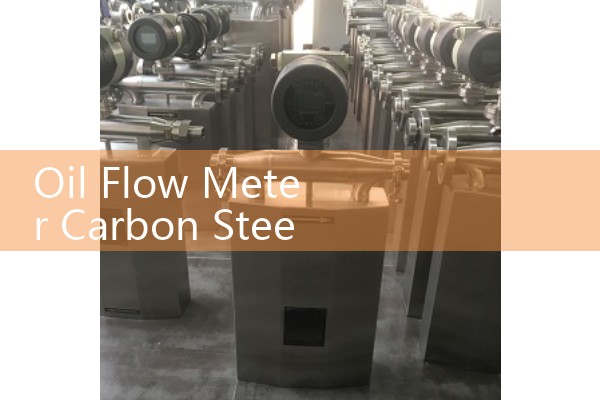
We see the clearest fit in diesel and biodiesel blending, kerosene filling stations, fuel consumption monitoring on marine engines, and hydraulic oil test benches. A carbon steel body is also common in lube oil circulation systems where the fluid is clean and temperature stays below 120 °C. For example, a power rental company in the Middle East uses Silver Instruments oval gear meters with carbon steel bodies to track fuel burn on mobile generators. Each trailer gets two meters: one on the supply line and one on the return. The net consumption data goes to a remote terminal via Modbus RTU. The meters have 4‑20 mA, pulse, and RS485 outputs wired in parallel. The carbon steel housings survived transport vibration and desert heat without cracking.
A paint manufacturer in Southeast Asia needed to batch raw linseed oil, a clean petroleum‑derived product. They originally spec’d stainless steel, but after testing our carbon steel oval gear meter with PPS rotors and Viton seals, they realized the wetted parts saw zero corrosion. They saved about 35 percent per meter. That is money redirected to more remote I/O modules instead of an over‑s
What Output Options and Extras to Consider
A rugged body is one part of the story. The internal components and transmitter make the real difference. For clean petroleum, the standard combination is an aluminum alloy or carbon steel housing, cast iron or PPS rotors, and Viton or PTFE O‑rings. The meter can then be paired with a local digital display that shows rate and total. Most customers ask for 4‑20 mA with HART protocol, plus an open‑collector pulse output for connecting to a PLC or flow computer. If the meter goes to an ATEX Zone 1 area—like a fuel loading gantry in Mozambique—we supply an intrinsically safe version with an Ex ia IIC T6 rating. The carbon steel body is naturally strong, but the electronics must match the hazardous area classification.
Temperature integration is another point often missed. When you measure diesel inventory, you want gross volume and net volume corrected to 15 °C according to ASTM D1250. That means the meter or the controller needs a PT100 input. Our carbon steel oval gear meters can include an integrated PT100 sensor inside the measuring chamber. The local indicator then applies the volume correction factor automatically. No separate flow computer needed for simple custody transfer or internal accounting.
Frequently Asked Questions About Carbon Steel Oil Flow Meters
Q: Can I use a carbon steel flow meter for biodiesel B20 or B30?
A: Yes, as long as the blend is dry and free from free water. Biodiesel has slightly higher solvency, so we recommend Viton seals instead of standard NBR. The carbon steel body itself is compatible. For blends above B50, we suggest upgrading to stainless steel because of potential acidity from oxidation.
Q: What is the maximum pressure you recommend for a carbon steel oil meter?
A: Our standard carbon steel oval gear meters handle up to 40 bar with an ANSI 150 flange connection. We have tested up to 63 bar on a special cast version for a hydraulic test bench in Turkey. Give us your actual operating pressure, and we will confirm the rating for the specific meter size. The weak point is usually the O‑ring groove, not the body.
Q: How do I prevent internal wear when measuring dry kerosene?
A: Kerosene has very low lubricity compared to diesel. We add carbon‑graphite or PPS bearings inside the measuring chamber, and sometimes we slightly adjust the rotor clearance. This combination has lasted over 5 years on a kerosene filling skid in Fiji with minimal drift. The meter still met the ±0.5% accuracy requirement at their annual calibration check.
Q: Can I field clean a carbon steel oval gear meter without removing it from the line?
A: You can flush it with the process fluid or a compatible solvent, but we always recommend installing a Y‑strainer upstream (80 mesh for light oil). For heavy dirt, the meter cover needs to be opened. The measuring unit lifts out as a complete insert. This is a 5‑minute job if isolation valves are in place.
Q: Does a carbon steel meter need earthing for static electricity?
A: Yes, definitely. Clean petroleum flowing through the meter generates static charge because the liquid is non‑conductive. Our carbon steel body meters come with a grounding lug as standard. Connect it to the plant grounding grid with a copper strap. We have seen skipping flow readings on ungrounded meters, usually caused by static discharge interfering with the preamplifier.
Get a Specific Quote for Your Application
Instead of searching for a one‑size‑fits‑all price list, send us your real operating conditions. Tell us the fluid type, flow range in L/min or m³/h, operating pressure in bar, temperature range in °C, pipe size (DN), and required output signals. We will reply with a recommended carbon steel or stainless steel meter model, drawing, and price within one working day. For hazardous area use, share the zone and gas group. Reach Silver Automation Instruments at Email: [email protected], Tel: +86-25-68650347, WhatsApp: +86-25-52155837, or WeChat: +86 15365082610. We ship to Southeast Asia, Oceania, Latin America, Africa, and the Middle East from our China factory with full documentation and calibration certificates.
 Hot Product
 Related AD