

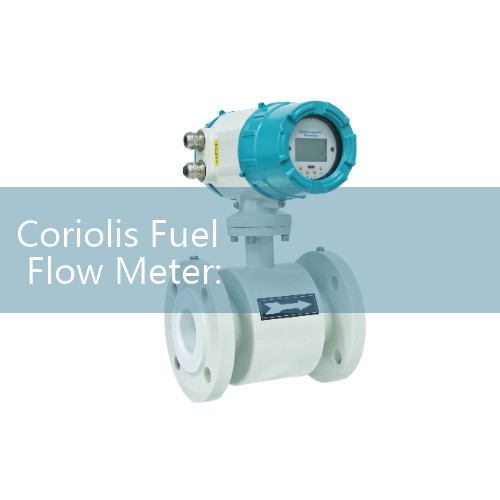
『Coriolis Fuel Flow Meter: High Precision Fleet Consumption Tracking Logistics』Related information(clamp on meter|electromagnetic meter|venturi meterrotameter|orifice meter|ultrasonic flow meter|mass flow meter|coriolis mass flow meter|coriolis flow meter|magnetic flow meter|magmeter flow meter|magflow flow meter|mag meter flow meter|electromagnetic flow meter|vortex flow meter|turbine flow meter|thermal mass flow meter|thermal flow meter|rotameter flow meter)
Coriolis Fuel Flow Meter for High Precision Fleet Consumption Tracking in Logistics
Quick Answer: A Coriolis fuel flow meter measures mass flow directly in kg/h or t/h. It gives better repeatability than turbine or positive displacement meters on diesel, bunker fuel, and gasoline fleet lines. For logistics teams that track fuel consumption across trucks, gensets, or vessels, Silver Instruments supplies compact units with 4-20 mA HART and Modbus RTU from stock in Singapore and Nanjing.
Here is the thing. Fleet fuel tracking fails when volume changes with temperature. Diesel expands by roughly 0.1 percent per degree Celsius. A 40 °C swing on a 20,000 L tank changes the apparent volume by hundreds of liters. A Coriolis meter reads mass. Mass does not change with temperature. That is the main reason logistics operators in the Middle East and Southeast Asia move from turbine meters to Coriolis meters on fuel skids and refuelling trucks.
Where We See Coriolis Fuel Meters Used
We see these meters on diesel bowsers in Australia. A customer in Singapore runs five of them on bunker fuel transfer lines. Mining fleet fuel stations in Chile use the same DN40 size for high flow refuelling. In West Africa we have supplied units for truck loading gantries at depots. The meter sits between the pump and the nozzle or between the storage tank and the fuel dispenser. It records each batch as mass. The control room gets a signal from 4-20 mA HART. That signal feeds a flow computer or PLC.
Last year a customer in Vietnam asked us to replace an oval gear meter on a diesel bowser. His issue was not accuracy in ideal conditions. The issue was drift. The oval gear meter wore over time because the diesel had low lubricity. A Coriolis meter has no moving parts in the flow path. It does not rely on gears, pistons, or rotors. That removes one failure mode.
What Specs Matter for Fuel Measurement
Start with the pipe size. For truck refuelling at 20 to 80 L/min we usually quote DN15 or DN20. For tanker unloading at 300 to 800 L/min we move to DN25 or DN40. For bunker fuel transfer at 10 to 60 t/h we quote DN50 or DN80. Every quote should include flow range in kg/h, not just pipe size.
Ask for 316L stainless steel wetted parts for diesel and gasoline. For heavy fuel oil with high sulphur or high temperature, request Hastelloy C22. The meter needs a PT100 temperature sensor built in. That sensor gives you fluid temperature and density compensation data. Most models from Silver Instruments include this as standard.
For hazardous areas, specify ATEX Zone 1 or IECEx Ex db. Fuel loading terminals, tanker bays, and marine engine rooms often sit inside Zone 1. Do not skip this. A non-certified meter on a fuel line is a safety risk and a customs issue in some regions.
Outputs and Fleet Data Integration
Fleet consumption tracking needs more than a local totalizer. The meter should send data to the backend. We recommend 4-20 mA HART for local flow rate and totalized mass. Add Modbus RTU RS485 if you want density, temperature, and diagnostic codes. Some logistics platforms accept pulses. In that case set the pulse output to 0.1 kg per pulse or 1 kg per pulse depending on batch size.
But most engineers skip this part. They order a meter with pulse output only and later find they cannot read density or temperature remotely. This becomes a problem when a fuel batch fails a temperature correction audit. Specify HART or Modbus at the start. The cost difference is small.
Accuracy, Repeatability, and Calibration
A standard Coriolis fuel flow meter from Silver Instruments holds 0.2 percent mass flow accuracy for diesel and gasoline. Repeatability is usually 0.05 percent
_600x400.jpg)
We calibrate every fuel meter on a water or diesel rig before shipping. We include a five point calibration certificate. For marine bunker fuel we can calibrate with a viscous oil if you provide the viscosity in cP. Heavy fuel oil at low temperature can reach 200 to 300 cP. Viscosity does not change mass measurement much, but it affects pressure drop. Tell us the viscosity so we size the meter correctly.
Installation Notes for Fuel Skids
Coriolis meters do not need upstream straight run like turbine or vortex meters. That is a real advantage on a tight fuel skid. You still need to remove air. Air bubbles cause density reading errors and flow noise. Install a deaerator or air eliminator before the meter if the fuel line has return flow or splashing inside the tank.
Mount the meter so the tubes stay full. On a vertical line, flow upward. On a horizontal line, keep the meter body level. Use flexible hoses on truck mounted systems to reduce stress. Vibrations from pumps or generators can affect the sensor. Most modern transmitters filter this, but mechanical stress on the manifold should be avoided.
For logistics depots, we supply compact versions with a built in display and totalizer. The display shows kg, t, or L if you set a fixed density. The local display helps drivers verify a batch without opening a laptop. A second output goes to the depot control system.
Regional Support and Stock
Silver Automation Instruments keeps standard DN15 to DN50 fuel meters in stock in Nanjing and can ship to Southeast Asia, Oceania, the Middle East, Africa, and Latin America. We send documentation in English. On request we add Spanish, Arabic, or Portuguese labels. Most customers in Chile, Saudi Arabia, Indonesia, Nigeria, and Australia receive orders within 5 to 10 business days by air freight.
We have seen customer sites where a flow meter order took two months because the supplier had no local stock. Our position is different. Standard fuel flow meters ship fast. Custom flanges, exotic wetted parts, or special calibration take longer. We tell you the lead time before you pay.
FAQ
Q: Why use mass flow instead of volume flow for fleet fuel tracking?
A: Volume changes with temperature. Mass does not. A mass reading in kg removes temperature correction arguments between fuel suppliers and logistics teams.
Q: Can a Coriolis fuel flow meter handle diesel, gasoline, and heavy fuel oil?
A: Yes. Select 316L stainless steel for clean fuels. Select Hastelloy C22 for high sulphur or high temperature heavy fuel oil. Tell us the viscosity in cP when you send the inquiry.
Q: Do I need straight run upstream of the meter?
A: No. Coriolis meters do not need long straight pipe sections. That is why installation is easier on fuel skids and truck mounted systems.
Q: What outputs should I order for fleet consumption tracking?
A: Order 4-20 mA HART plus Modbus RTU RS485. If you use a pulse input on a legacy system, add a configurable pulse output. This saves rework later.
Q: Is ATEX Zone 1 certification required for fuel loading?
A: In most fuel depots and marine engine rooms, yes. Specify ATEX Zone 1 or IECEx Ex db at the quote stage. We can provide the certificate before shipment.
Send us your fuel type, flow range in kg/h, pipe size in DN, operating temperature in °C, and hazardous area classification. We will reply with a model recommendation and a price in USD. Tel: +86-25-68650347. Whatsapp: +86-25-52155837. WeChat: +86 15365082610.
 Hot Product
 Related AD