

『What is Ultrasonic Flow Meter: Transit-Time Acoustic Pipeline Tracking Basics』Related information(clamp on meter|electromagnetic meter|venturi meterrotameter|orifice meter|ultrasonic flow meter|mass flow meter|coriolis mass flow meter|coriolis flow meter|magnetic flow meter|magmeter flow meter|magflow flow meter|mag meter flow meter|electromagnetic flow meter|vortex flow meter|turbine flow meter|thermal mass flow meter|thermal flow meter|rotameter flow meter)
What Is Ultrasonic Flow Meter: Transit-Time Acoustic Pipeline Tracking Basics
Quick Answer: Transit-time ultrasonic flow meters measure flow by sending acoustic signals through a moving liquid. The signal traveling with the flow moves faster than the signal traveling against the flow. The meter reads this time difference and converts it to flow velocity. For clean water, seawater, chemicals, and light oils, this method gives repeatable data from outside the pipe or with wetted sensors.
Many engineers first meet transit-time ultrasonic meters on water networks, district cooling lines, or chemical transfer skids. Silver Automation Instruments supplies these meters for pipe sizes from DN15 to DN3000 and for liquids from clean water to light oil. The key point is simple: the meter reads time difference, not sound amplitude. That operating principle differs from Doppler ultrasonic flow meters.
How Transit-Time Acoustic Pipeline Tracking Works
A transit-time ultrasonic flow meter uses two transducers. One transducer fires an acoustic pulse downstream. The other fires a pulse upstream. A liquid flowing through a pipe carries the downstream signal slightly faster. The upstream signal takes slightly longer. The meter measures the time difference between the two pulses. This time difference is small, often in the nanosecond range. The electronics convert that time difference to a flow velocity in meters per second. Then the meter calculates volumetric flow in cubic meters per hour or liters per minute using pipe area.
In practice, a DN100 water line at 1.2 m/s can show a time difference of roughly 20 to 40 nanoseconds depending on path count and transducer frequency. That is enough for a stable 4-20 mA signal. The signal path can be single path or dual path. Dual path and triple path meters average more of the flow profile. This gives better accuracy on large pipes or short straight runs.
Wet Transducers vs Clamp-On Sensors
Many transit-time meters are clamp-on. The transducers mount on the outside of a pipe. No cutting, no process shutdown. This is common in water and wastewater plants. Wetted transducers are inserted into the flow stream. They work better for difficult pipe materials or when the pipe wall attenuates the signal. For a stainless steel pipe with a clean internal surface, clamp-on is acceptable. For lined pipe, concrete pipe, or pipe with scale, wetted sensors give a stronger signal.
We have seen this on customer sites many times. A water utility in Southeast Asia used clamp-on transducers on a DN200 cement-lined ductile iron pipe. The signal was unstable until they switched to a wetted spool piece. A paint manufacturer in Vietnam found a similar issue on a solvent return line with a rubber lining. In those cases, wetted models solved the problem.
Installation Data That Changes Accuracy
Transit-time accuracy depends on pipe parameters and flow profile. The meter needs pipe outside diameter, wall thickness, pipe material, liner material, liquid type, and temperature. A small error in wall thickness will shift the flow reading. The same applies to pipe circumference. Most engineers skip this part, then wonder why the reading is off by 3 percent.
For custody transfer or billing, use a wetted flow tube supplied by the manufacturer. For process monitoring, clamp-on is often enough if you enter the correct pipe data. Here is the thing. The best repeatability comes from a fully developed flow profile. You want straight run upstream and downstream. A standard rule is 10 diameters upstream and 5 diameters downstream. A control valve or elbow too close will distort the velocity profile. That will reduce accuracy even if the meter itself is fine.
Because a transit-time meter reads velocity along a narrow acoustic path, the location of the transducers matters. On a vertical pipe install the transducers on a rising line if possible. This keeps the pipe full and lowers the risk of air pockets. On horizontal lines, avoid mounting at the top where gas collects.
Where Transit-Time Ultrasonic Flow Meters Fit in Industrial Processes
These meters work well in clean liquids with low solids or gas bubbles. T
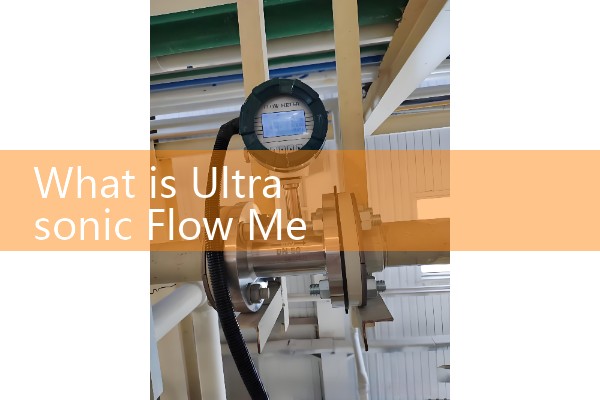
A transit-time meter can be used on pipe sizes from DN15 up to DN3000 or larger. The same clamp-on transmitter can be moved from one pipe size to another, which helps service teams and rental companies. A food and beverage plant in Latin America used two clamp-on transducers on a DN50 CIP return line. The meter measured water flow at 85 °C during cleaning cycles and remained stable.
For desalination plants, a seawater flow meter for desalination plant feed and brine lines often needs wetted transducers because of high salinity and varying temperature. Silver Automation Instruments supplies sonic seawater flow meters with PTFE or PVDF transducers for these lines. For water and wastewater, clamp-on ultrasonic flow meters are often selected because pipe shutdown is expensive.
Typical Specs and Output Signals
A transit-time ultrasonic flow meter from Silver Automation Instruments can include 4-20 mA output, pulse output, RS485 Modbus, and HART. Some units carry ATEX Zone 1 certification for gas or solvent installations. The wetted transducer material can be stainless steel, PTFE, or PVDF depending on the liquid. Accuracy is normally 1 percent of reading for clamp-on and 0.5 percent for a factory-calibrated spool piece. Repeatability is often 0.2 percent. Turndown can be 100 to 1 on clean water.
Power supply options include 24 V DC or 85 to 265 V AC. Temperature ratings depend on the transducer, with standard clamp-on sensors rated up to 120 °C. Higher temperature sensors and high temperature coupling compounds are available for pipe surface temperatures up to 180 °C. A PT100 input is available on the TUF series for temperature compensation in energy monitoring. For mass flow in kg/h, pair the meter with a flow computer or use density compensation.
We recommend the Silver Automation Instruments TUF series for clamp-on water, seawater, and chemical lines. The TUF series includes a wall-mount transmitter, two clamp-on transducers, and a signal cable. For permanent installations on small lines, a compact wetted model may be less expensive over the long term. The choice depends on your pipe material, straight run, and whether you can stop the flow.
FAQ on Transit-Time Ultrasonic Flow Meters
What is the minimum pipe size for a transit-time ultrasonic flow meter?
DN15 clamp-on sensors are common. Smaller lines often use a wetted compact meter because the transducer mounting area becomes tight.
Can a transit-time meter measure wastewater or sludge?
No. This method is not suitable for high solids, sludge, or liquids with more than 1 to 2 percent gas bubbles. Use an electromagnetic flowmeter for those applications.
What pipe materials work with clamp-on transducers?
Steel, stainless steel, copper, PVC, PVDF, and some lined pipes can work. Concrete, wood stave, and heavily scaled pipes are poor candidates. Send the pipe material and wall thickness before quoting.
What data do you need to recommend a model?
Send us your pipe size (DN), pipe material, wall thickness, liquid type, temperature (°C), pressure (bar), and flow range in m3/h. We will suggest a wetted or clamp-on model and a complete meter with output options.
How often does a transit-time meter need calibration?
A factory-calibrated wetted flow tube usually has a calibration interval of two years. Clamp-on meters should be verified against a reference flow measurement once per year. Silver Automation Instruments can supply calibration certificates for new meters.
For quotes or technical selection, contact Silver Automation Instruments at Tel: +86-135-1213-1526, WhatsApp: 86-135-12131526, or WeChat: +86 13512131526. Our site is flow-meter.com.au.
 Hot News
 Related AD